How to find the right glove size by age and position, plus how to size batting gloves.
Buying a glove is not one-size-fits-all. The right size depends on your player's age and where they play, and it is measured differently than you might expect. This guide gives you the glove size charts by age and by position, shows you how to measure and how a glove should fit, and covers batting glove sizing too.
What size baseball glove do you need? Size the glove to your player's age and position. As a quick guide, ages 4 to 6 use a 9 to 10 inch glove, 7 to 9 use 10 to 11 inches, 10 to 12 use 11 to 11.75 inches, and adults use 11.25 to 12.75 inches depending on position. Infielders use smaller gloves, outfielders use the largest, and catchers and first basemen use mitts measured by circumference.
The two things that decide glove size
Age and hand size set the starting length. A young player needs a glove they can actually close on their own, so do not oversize it.
Position fine-tunes the size and shape. Middle infielders want a small, quick glove, outfielders want a big one with reach, and catchers and first basemen use mitts built for the job.
Baseball glove size chart by age
Start here for younger players, then adjust for position once they settle into a spot on the field. Sizes are the length in inches.
Age (years)
Glove size
4 to 6 (T-ball)
9 to 10 in
7 to 9
10 to 11 in
10 to 12
11 to 11.75 in
13 to 14
11.75 to 12.25 in
15 and up (adult)
11.25 to 12.75 in (by position)
Baseball glove size chart by position
Once a player has a position, size the glove to the job. These are typical adult sizes.
Position
Glove size
Why
Second base
11.25 to 11.5 in
Smallest infield glove, for quick transfers
Shortstop
11.5 to 11.75 in
A touch bigger than second base for range
Third base
11.75 to 12 in
A little more glove to knock down hard shots
Pitcher
11.5 to 12 in
Closed web to hide the grip
Outfield
12.5 to 12.75 in
Largest glove, more reach and a deep pocket
First base
12 to 13 in
A first base MITT, longer with a curved edge
Catcher
32 to 34.5 in
A catcher's MITT, measured by circumference
Preferences vary and some players size up or down by a quarter inch. When in doubt, a slightly smaller, controllable glove beats one that is too big to close.
How to measure a baseball glove
1
Measure the length. A fielding glove is measured from the top of the index finger, down the palm, to the heel. That number in inches is the glove size on the chart.
2
Mitts are different. Catcher's mitts and first base mitts are measured by circumference, not finger length, which is why a catcher's mitt reads as 32 to 34.5 inches.
3
Check the fit. The hand should fill the glove with fingertips reaching the finger stalls, and your player should be able to open and close it on their own. A little growing room is fine, a glove that swallows the hand is not.
How to size batting gloves
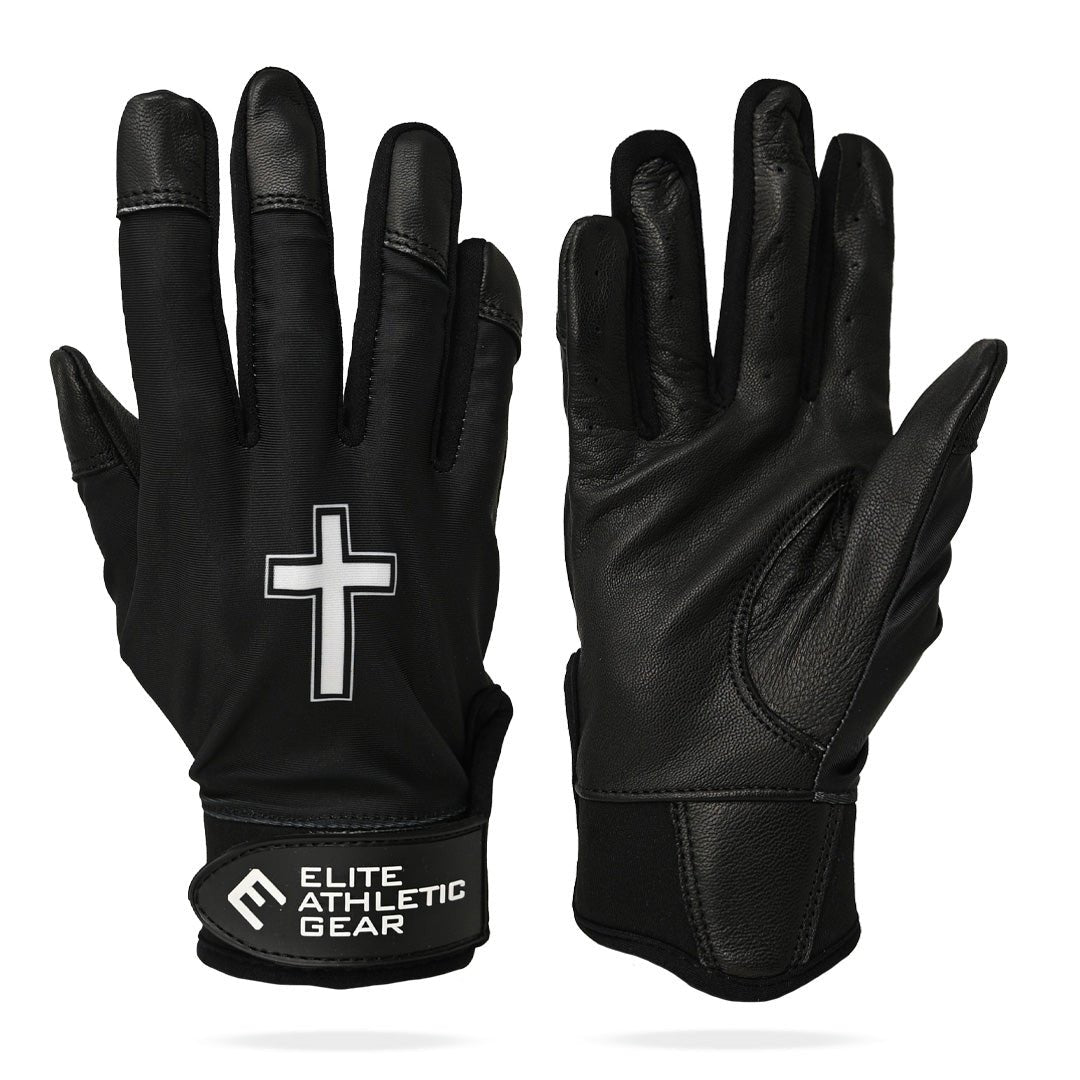
Batting gloves are sized by the hand, from youth small up to adult large and extra large. Measure around your palm at the knuckles, or your hand length from the tip of the middle finger to the base of the palm, then match it to the brand's chart. They should fit like a snug second skin with almost no extra material at the fingertips.
Batting glove size
Typical fit
Youth Small
Ages 4 to 6
Youth Medium
Ages 7 to 9
Youth Large
Ages 10 to 12
Adult Small
Smaller adult hand
Adult Medium
Average adult hand
Adult Large / XL
Larger adult hand
Batting glove sizing varies by brand, so always check the specific brand's size chart before you buy.
Gear up for the season
Shop personalized batting gloves and the gear your player needs at Batter Box Sports, then keep going with our free player guides.
Match the glove to age and position. A rough guide: ages 4 to 6 use a 9 to 10 inch glove, 7 to 9 use 10 to 11 inches, 10 to 12 use 11 to 11.75 inches, and 13 and up move into adult sizes of 11.25 to 12.75 inches depending on where they play. Do not size up too far, because a glove that is too big is hard for a young player to close.
How is a baseball glove measured?
A fielding glove is measured in inches from the top of the index finger, down the palm, to the heel of the glove. Catcher's mitts and first base mitts are the exception, they are measured by circumference, which is why a catcher's mitt reads as 32 to 34.5 inches rather than a finger length.
What size glove is right for each position?
Middle infielders use smaller gloves for quick transfers (second base 11.25 to 11.5 inches, shortstop 11.5 to 11.75 inches), third basemen and pitchers use around 11.5 to 12 inches, and outfielders use the largest gloves at 12.5 to 12.75 inches for extra reach. First basemen use a 12 to 13 inch mitt and catchers use a 32 to 34.5 inch mitt.
How should a baseball glove fit?
Snug, with the hand filling the glove and the fingertips reaching into the finger stalls. Your player should be able to open and close the glove with control on their own. A little growing room is fine for youth players, but a glove that swallows the hand will make catching harder, not easier.
What is the difference between a glove and a mitt?
A glove has individual fingers and is used by pitchers, infielders, and outfielders. A mitt has no separate fingers, just a single pocket, and is used only by catchers and first basemen. That extra padding and shape is built for catching hard throws and pitches all game long.
How do I size batting gloves?
Batting gloves are sized by hand, usually from youth small up to adult large or extra large. Measure around your palm at the knuckles, or your hand length from the tip of the middle finger to the base of the palm, then match it to the brand's chart. They should fit like a snug second skin with very little extra material at the fingertips. Sizing varies by brand, so check the specific chart before you buy.
Bible verses that fit a baseball glove, sorted by how much space each spot gives you, plus which marker survives a season and the pitcher glove rule to check first.
Plan the perfect baseball senior night with our complete guide: poster vendors, ceremony order, speech templates, gifts, and the emotional last at-bat tradition.
Four different products get called a baseball wristband. Here is how to tell signal wristbands, silicone message bands, sweatbands and compression support apart, what each costs, and how to size one.